
To log in or sign up to CareerOS, select your user type first
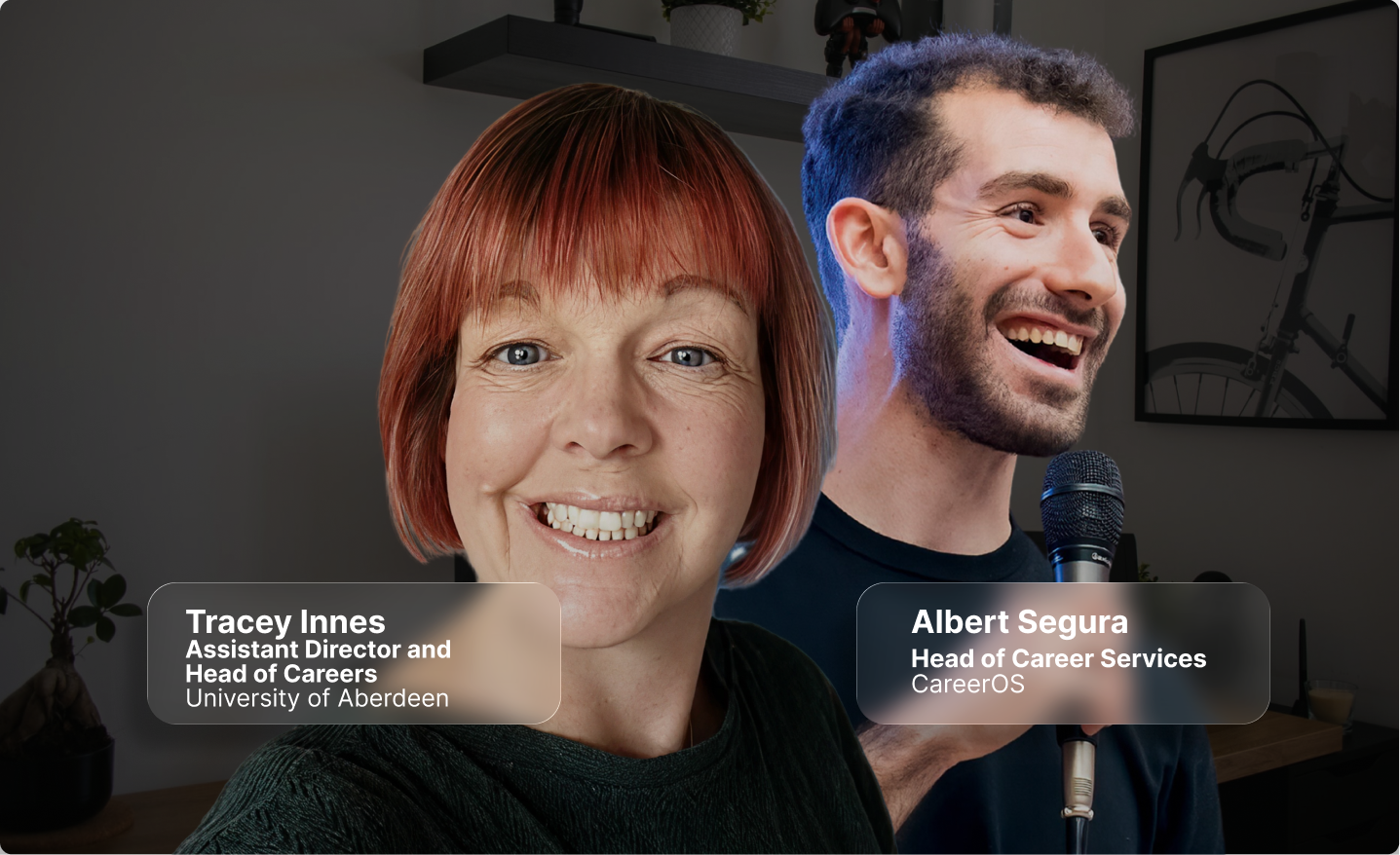
Inside the University of Aberdeen's research and evidence-first approach to student support, and how to make confident decisions in a fast-changing world of work.
Date: June 4, Thursday
Time: 3:00PM GMT+1 / 4:00PM CEST
Location: Online
Career services are under constant pressure to move fast — adopt the new platform, layer in the latest AI feature, keep pace with the next big thing. But the teams making the best long-term decisions often aren't the fastest movers. They're the ones who pause to ask a harder question: what does the evidence actually tell us?
So how do you make confident, future-ready decisions about how you support students — when the world of work is changing at lightning speed?
In this webinar, Albert Segura speaks with Tracey, who leads the careers service at the University of Aberdeen, about a way of working that few institutions apply with real discipline. Over many years, her team has built a career service that treats research as core practice, not an afterthought — running practitioner-led research projects, designing support around how students genuinely behave, and rigorously critiquing the tools and platforms they already rely on.
Together, they will discuss:
🔎 Why research-informed decision-making is a career service's strongest defence against hype and short-term thinking
🔎 How Aberdeen runs practitioner-led research projects — securing funding, designing studies, and feeding findings back into degree programmes
🔎 How to rigorously critique the tools and platforms you already have — and decide what's genuinely working for students
🔎 How to build a strategic planning rhythm that keeps career services ahead of constant change
🔎 Current questions we are asking about what it really takes to understand how today's students consume information and approach the job search and why the "vacancy gap" persists — employers not posting, students not engaging





.png)