

The numbers nobody is telling you about
Here is a scenario happening right now at universities around the world.
A recruiter at a mid sized consulting firm in Singapore posts an entry level role. Within 48 hours, over 400 applications land in their inbox. A significant chunk of those applications were written, polished and submitted with the help of AI tools. The cover letters are clean. The CVs are formatted perfectly. The keywords match the job description almost too well.
The recruiter opens the first ten. They all sound exactly the same.
This is the new reality of the global job market. And the numbers behind it are more serious than most students realise.
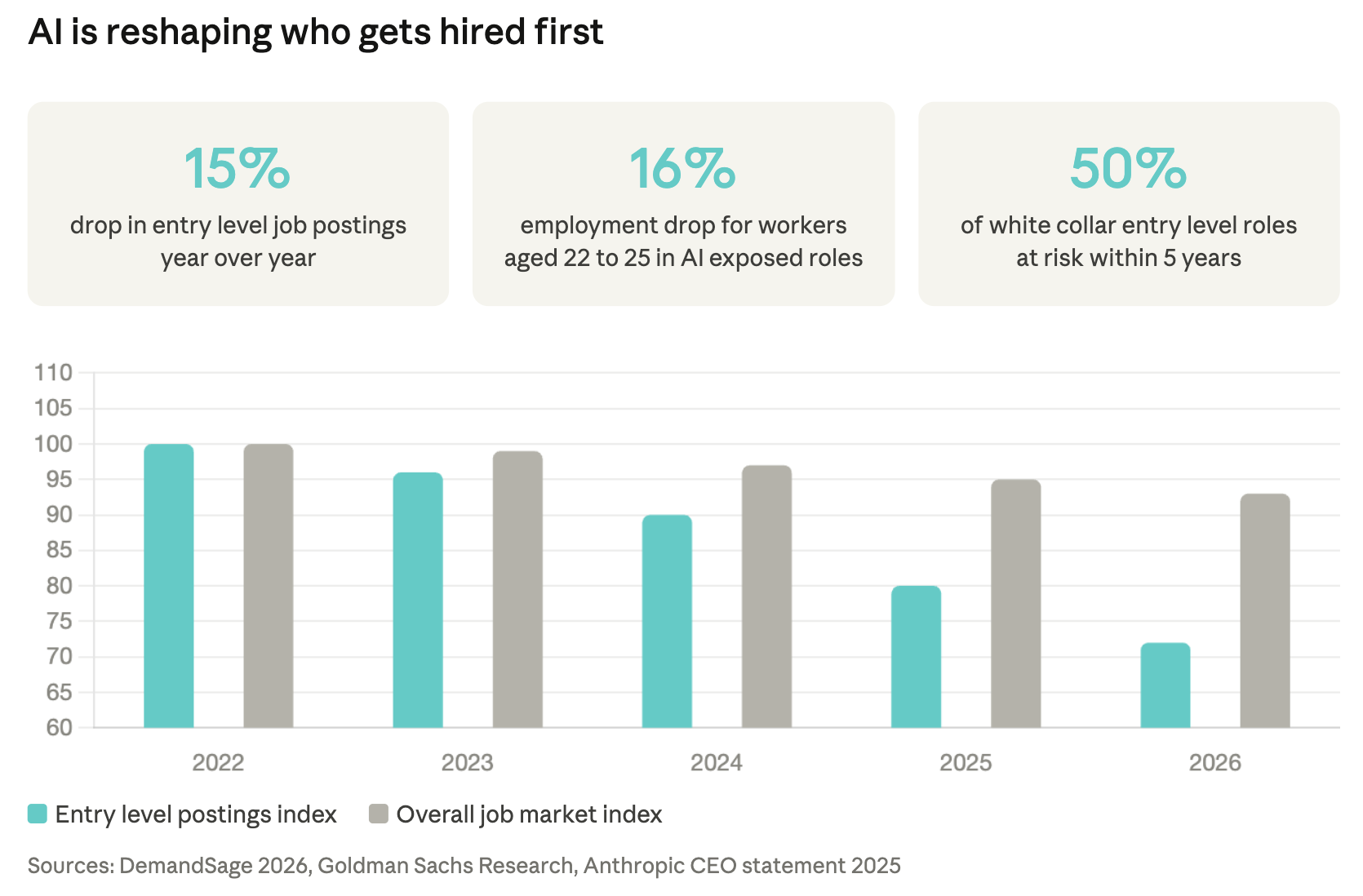
Entry level job postings have dropped 15% year over year. Workers aged 22 to 25 in AI exposed roles have already seen a 16% drop in employment, even while experienced workers in the same fields remain stable. And the CEO of one of the world's leading AI companies publicly predicted in 2025 that AI could eliminate roughly 50% of white collar entry level positions within the next five years.
So yes. The threat is real. Ignoring it is not optimism. It is just being unprepared.
But here is what the doom and gloom narrative consistently gets wrong.
AI has not made human connection less valuable. It has made it more valuable than ever. Because while AI can write your cover letter, format your CV, and generate a list of target companies in seconds, there is one thing it simply cannot do for you. It cannot have a real conversation with a real person who then puts your name forward before a role is ever publicly advertised.
And that conversation is where most jobs are actually won.
The strategy that actually works
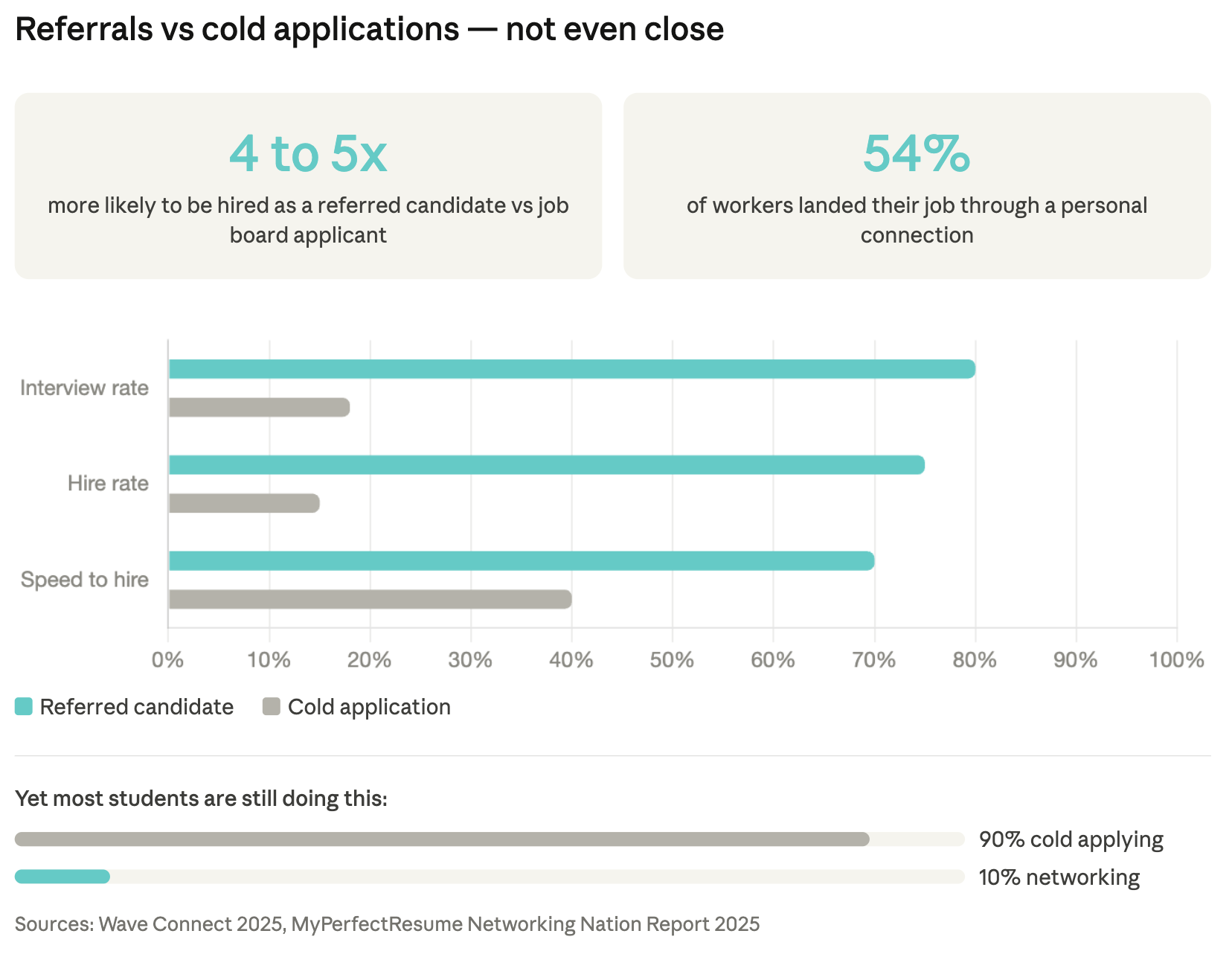
Think about what a referral actually means in practice. You are not competing against 400 people. You are competing against almost no one. The hiring manager already has a reason to look at your application differently. Referred candidates are 4 to 5 times more likely to be hired than non referred applicants, and they get hired roughly 30% faster. That is not a marginal advantage. That is a completely different game.
Yet most students are still spending 90% of their energy on the strategy with the lowest return. Submitting cold applications into job boards and waiting. Refreshing their inbox. Applying to ten more. Wondering why nothing moves.
Here is why it feels that way. Networking is uncomfortable because it is unstructured. Most students reach out to one or two people, have a call, feel good about it and then completely forget to follow up. The thread goes cold. The relationship evaporates. Six months later they are no further forward.
The problem is not the strategy. The problem is not having a system to execute it.
This is exactly where CareerOS is doing something genuinely different. Instead of leaving you to juggle LinkedIn tabs, email threads and forgotten notes, CareerOS gives you the infrastructure to actually do networking properly. AI suggests the right people to contact at your target companies. You reach out directly through LinkedIn or email without leaving the platform. Every conversation is logged. Every follow up is prompted at the right moment. Nothing falls through the cracks.
One student at EADA Business School described contacting more than four people daily and constantly losing track of who she had spoken to. CareerOS changed that. The conversations stopped disappearing. And conversations that do not disappear are the ones that turn into referrals, into interviews, into offers.
In a world where AI is handling everything generic, your edge is being the student who shows up as a real person with genuine curiosity and a real system behind them.
The students winning in the AI era are not the most technical. They are the most intentional.
Be intentional. Start building your network now at CareerOS.